Knowing but Not Taking: Decoding PrEP Refusal Behaviors and Compounding HIV Risks Among Chemsex Youth
02/10/2026
Beyond Retention Toward Person-Centred Bio-Psycho-Social Approach among Chemsex users: Lessons Learned from Re-engaging Services in a Community-led Clinic in Bangkok, Thailand
02/10/2026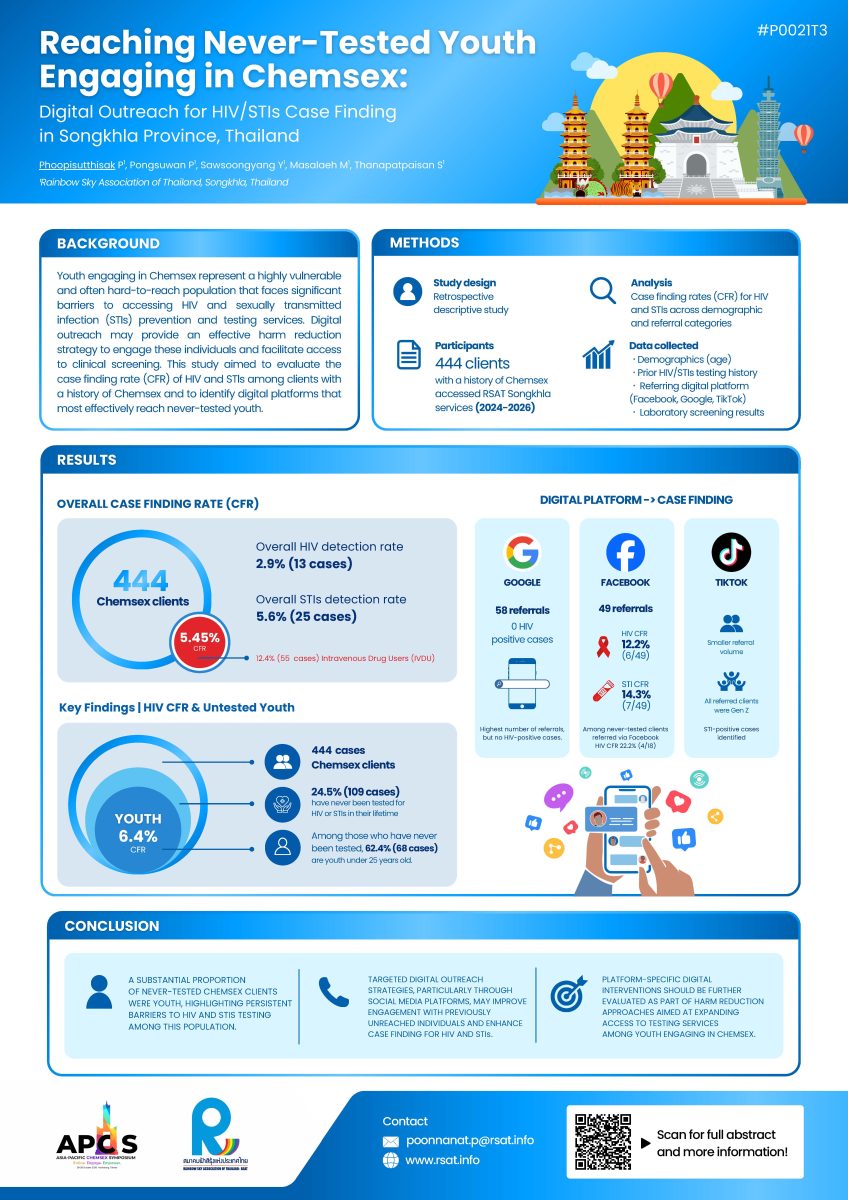
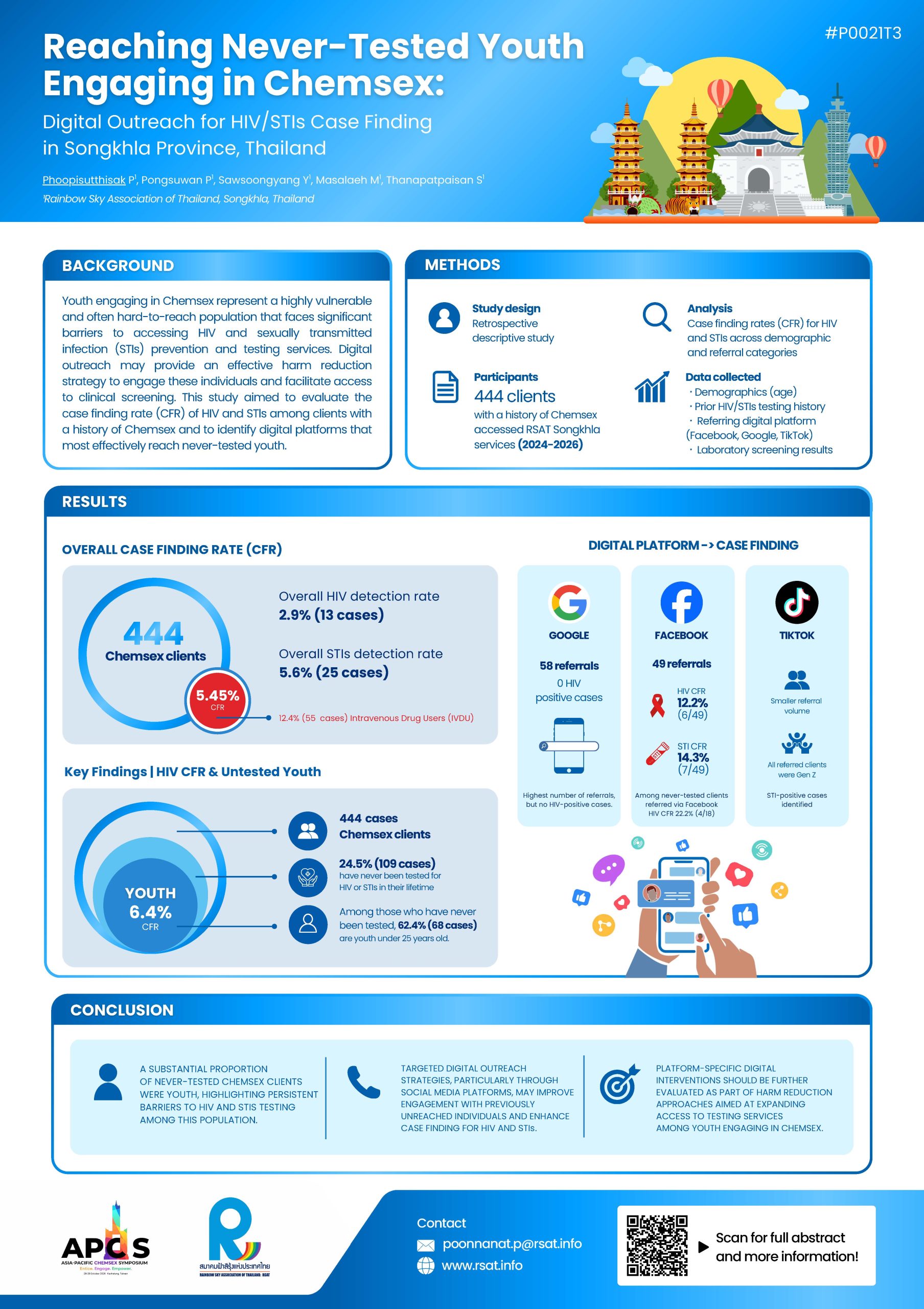
Youth engaging in Chemsex represent a highly vulnerable and often hard-to-reach population that faces significant barriers to accessing HIV and sexually transmitted infection (STIs) prevention and testing services. This study evaluates HIV/STIs case finding and the digital platforms that most effectively reach never-tested youth.
ประเด็นสำคัญ
- Among 444 clients, the overall CFR was 2.9% (n=13) for HIV and 5.6% (n=25) for STIs.
- 24.5% (n=109) had never been tested for HIV or STIs; 62.4% (n=68) of this group were youth under 25 years, with an HIV CFR of 6.4%.
- Facebook referrals had an HIV CFR of 12.2% (6/49) and STIs CFR of 14.3% (7/49).
- Among never-tested clients referred via Facebook, the HIV CFR increased to 22.2% (4/18).
- Google generated the highest number of referrals (n=58) but yielded no HIV-positive cases.
Background
Youth engaging in Chemsex represent a highly vulnerable and often hard-to-reach population that faces significant barriers to accessing HIV and sexually transmitted infection (STIs) prevention and testing services. Digital outreach may provide an effective harm reduction strategy to engage these individuals and facilitate access to clinical screening. This study aimed to evaluate the case finding rate (CFR) of HIV and STIs among clients with a history of Chemsex and to identify digital platforms that most effectively reach never-tested youth.
Methods
A retrospective descriptive study was conducted using clinical data from 444 clients with a history of Chemsex who accessed services at RSAT Songkhla during the 2024–2026 fiscal years. Variables analyzed included age, prior HIV/STIs testing history, referring digital platform (e.g., Facebook, Google, and TikTok), and laboratory screening results. Case finding rates for HIV and STIs were calculated across demographic and referral categories.
Results
Among the 444 clients, the overall CFR was 2.9% (n=13) for HIV and 5.6% (n=25) for STIs. Additionally, 12.4% (n=55) reported intravenous drug use, indicating multiple behavioral risk factors. Of all clients, 24.5% (n=109) had never been tested for HIV or STIs. Among this never-tested group, 62.4% (n=68) were youth aged under 25 years, and the HIV CFR reached 6.4%. Analysis by referral platform demonstrated differences in case finding outcomes. Google generated the highest number of referrals (n=58) but yielded no HIV-positive cases. In contrast, clients referred through Facebook had an HIV CFR of 12.2% (6/49) and STIs CFR of 14.3% (7/49). Among never-tested clients referred via Facebook, the HIV CFR increased to 22.2% (4/18). Although TikTok generated a smaller number of referrals, all referred clients were members of Generation Z, and positive STI cases were identified within this group.
Conclusions
A substantial proportion of never-tested Chemsex clients were youth, highlighting persistent barriers to HIV and STIs testing among this population. The findings suggest that targeted digital outreach strategies, particularly through social media platforms, may improve engagement with previously unreached individuals and enhance case finding for HIV and STIs. Platform-specific digital interventions should be further evaluated as part of harm reduction approaches aimed at expanding access to testing services among youth engaging in Chemsex.
