Using Routine Community-led Service Data to Identify People Engaging in Chemsex at Highest Risk of HIV and STIs: Evidence from Rainbow Sky Medical Technology Clinic Ramkhamhaeng, Bangkok, Thailand
02/10/2026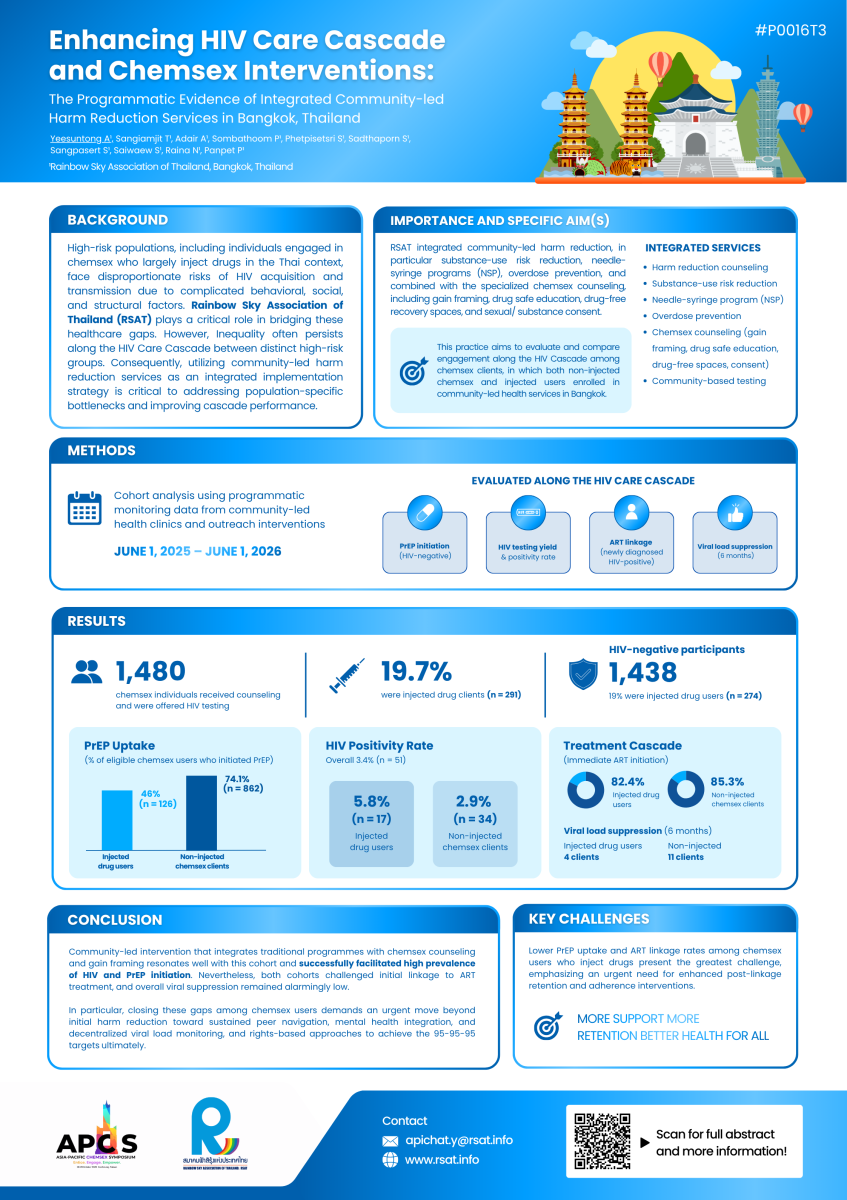
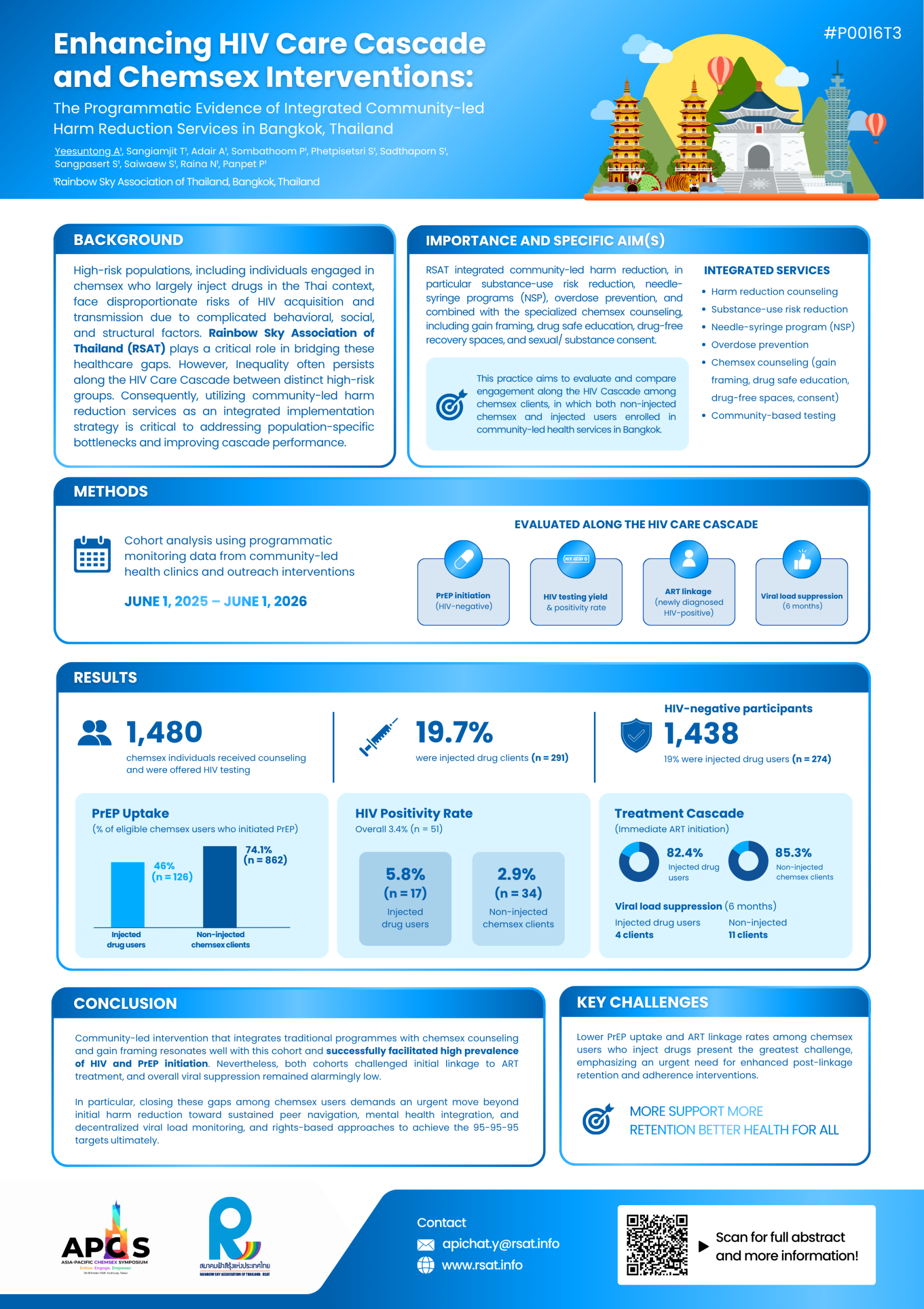
A cohort analysis of integrated community-led harm reduction and chemsex interventions in Bangkok, comparing HIV Care Cascade outcomes among injected and non-injected chemsex clients.
ประเด็นสำคัญ
- 1,480 chemsex individuals received counseling and HIV testing; 19.7% were injected drug clients (n=291).
- Among 1,438 HIV-negative participants, PrEP uptake was 46% among injected drug users (n=126) and 74.1% among non-injected chemsex clients (n=862).
- Overall HIV positivity was 3.4% (n=51), with 5.8% among injected drug users (n=17) and 2.9% among non-injected chemsex clients (n=34).
- Immediate ART initiation was 82.4% among injected drug users and 85.3% among non-injected chemsex clients.
- At 6 months, viral suppression was reported in 4 injected drug users and 11 non-injected chemsex clients.
Background
High-risk populations, including individuals engaged in chemsex who largely inject drugs in the Thai context, face disproportionate risks of HIV acquisition and transmission due to complicated behavioral, social, and structural factors. Rainbow Sky Association of Thailand (RSAT) plays a critical role in bridging these healthcare gaps. However, Inequality often persists along the HIV Care Cascade between distinct high-risk groups. Consequently, utilizing community-led harm reduction services as an integrated implementation strategy is critical to addressing population-specific bottlenecks and improving cascade performance.
Importance and specific aim(s)
RSAT integrated community-led harm reduction, in particular substance-use risk reduction, needle-syringe programs (NSP), overdose prevention, and combined with the specialized chemsex counseling, including gain framing, drug safe education, drug-free recovery spaces, and sexual/ substance consent. This practice aims to evaluate and compare engagement along the HIV Cascade among chemsex clients, in which both non-injected chemsex and injected users enrolled in community-led health services in Bangkok.
Description of program/intervention
A cohort analysis was conducted using programmatic monitoring data collected across community-led health clinics and outreach interventions between June 1, 2025, and June 1, 2026. Interventions provided to chemsex clients included counseling on harm reduction and community-based testing. Standardized metrics along the HIV Care Cascade were evaluated, specifically Pre-Exposure Prophylaxis (PrEP) initiation among HIV-negative individuals, HIV testing yield and positivity rate, Antiretroviral Therapy (ART) linkage among newly diagnosed HIV-positive individuals, and Viral Load (VL) suppression rates.
Lessons learned
During the 12-month study period, a total of 1,480 chemsex individuals, among them 19.7% were injected drug clients (n = 291), received chemsex and harm reduction counseling and were offered HIV testing. Among them, there were 1,438 HIV-negative participants; 19% were chemsex injected drug users (n = 274). PrEP uptake demonstrated that 46% of eligible chemsex users who injected drugs accessed PrEP interventions (n = 126), while 74.1% of non-injected chemsex clients initiated PrEP more than injected drug users (n = 862). Overall HIV positivity was 3.4% (n = 51), whereas it was significantly higher among 291 injected drug users, yielding 5.8% (n = 17), compared to the 1,198 non-injected chemsex cohort, which was HIV-positive at 2.9% (n = 34). Regarding the treatment cascade, there were rates of immediate ART initiation: 85.3% among non-injected chemsex clients and 82.4% among injected drug users. After 6 months, 11 non-injected chemsex users were reported to have viral suppression, and 4 clients who injected drugs confirmed viral load suppression. Apparently, lower PrEP uptake and ART linkage rates among chemsex users who inject drugs present the greatest challenge, emphasizing an urgent need for enhanced post-linkage retention and adherence interventions.
Conclusions and next steps
Community-led intervention that integrates traditional programmes with chemsex counseling and gain framing resonates well with this cohort and successfully facilitated high prevalence of HIV and PrEP initiation. Nevertheless, both cohorts challenged initial linkage to ART treatment, and overall viral suppression remained alarmingly low. In particular, closing these gaps among chemsex users demands an urgent move beyond initial harm reduction toward sustained peer navigation, mental health integration, and decentralized viral load monitoring, and rights-based approaches to achieve the 95-95-95 targets ultimately.
