
Beyond Retention Toward Person-Centred Bio-Psycho-Social Approach among Chemsex users: Lessons Learned from Re-engaging Services in a Community-led Clinic in Bangkok, Thailand
02/10/2026
Using Routine Community-led Service Data to Identify People Engaging in Chemsex at Highest Risk of HIV and STIs: Evidence from Rainbow Sky Medical Technology Clinic Ramkhamhaeng, Bangkok, Thailand
02/10/2026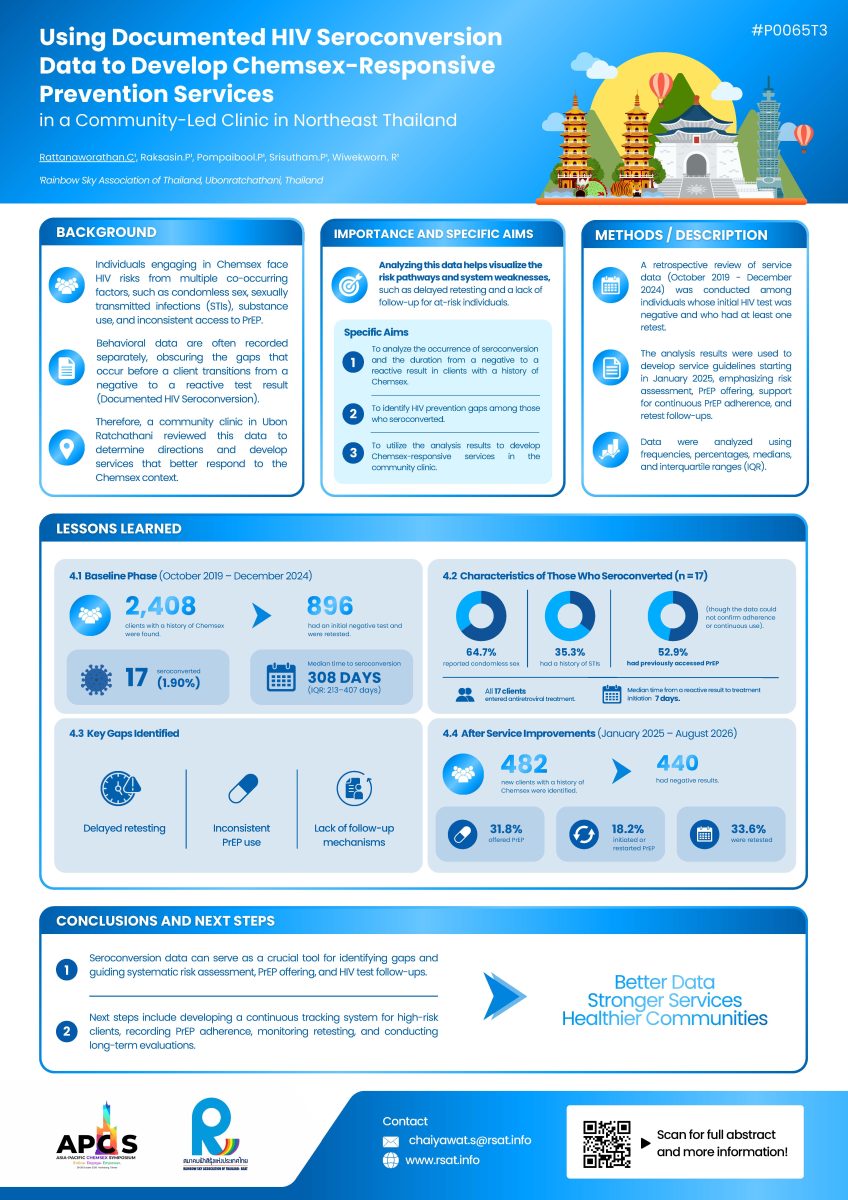
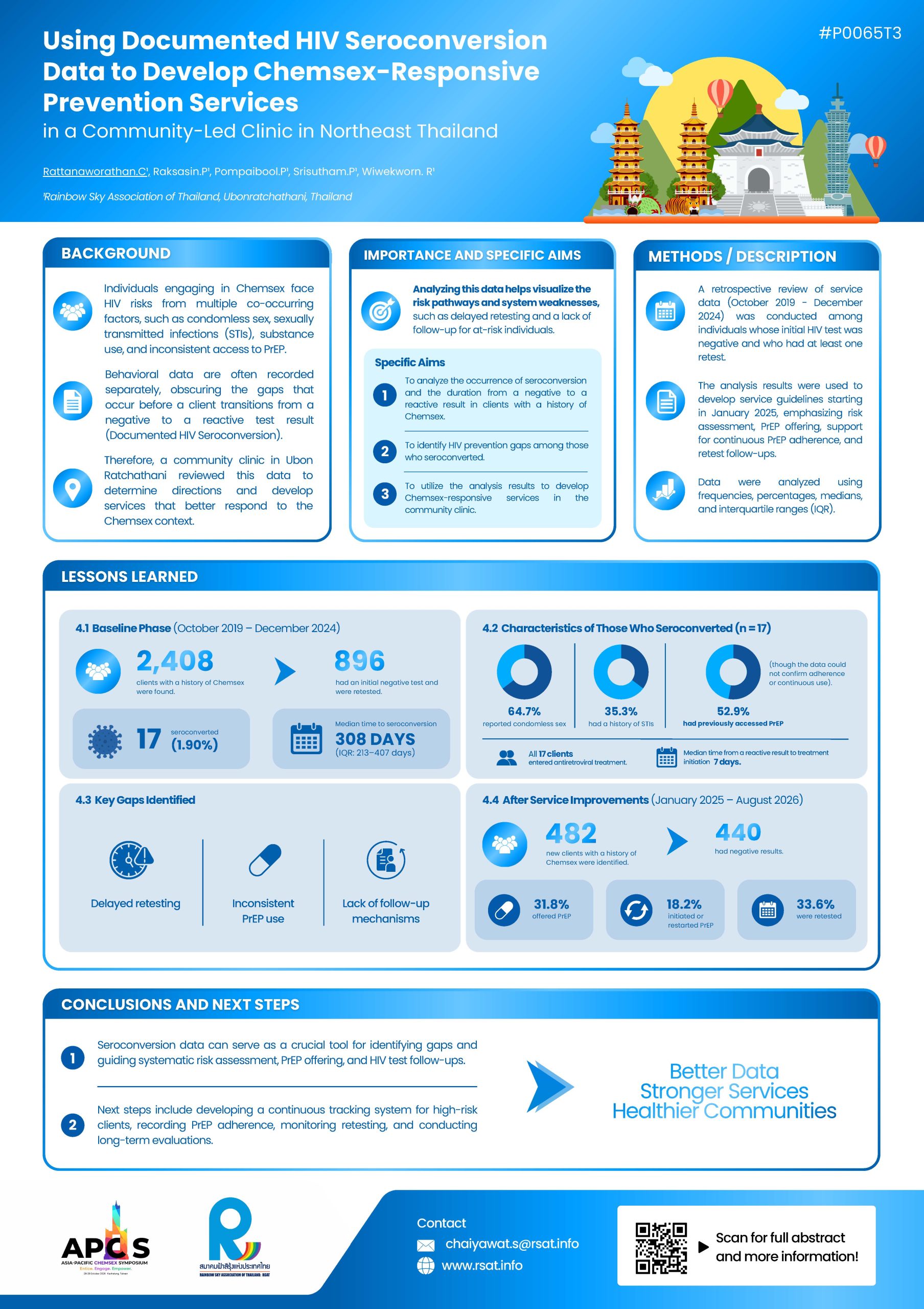
Individuals engaging in Chemsex face HIV risks from multiple co-occurring factors. This work uses documented HIV seroconversion data from a community-led clinic in Ubon Ratchathani to identify prevention gaps and guide Chemsex-responsive services.
ประเด็นสำคัญ
- Among 2,408 clients with a history of Chemsex, 896 had an initial negative HIV test and were retested.
- Seroconversion occurred in 17 individuals (1.90%), with a median time to seroconversion of 308 days (IQR: 213–407 days).
- Among those who seroconverted, 64.7% reported condomless sex, 35.3% had a history of STIs, and 52.9% had previously accessed PrEP.
- All 17 clients entered antiretroviral treatment, with a median of 7 days from reactive result to treatment initiation.
- After service improvements, 31.8% of eligible clients were offered PrEP, 18.2% initiated or restarted PrEP, and 33.6% were retested.
Background
Individuals engaging in Chemsex face HIV risks from multiple co-occurring factors, such as condomless sex, sexually transmitted infections (STIs), substance use, and inconsistent access to PrEP. Behavioral data are often recorded separately, obscuring the gaps that occur before a client transitions from a negative to a reactive test result (Documented HIV Seroconversion). Therefore, a community clinic in Ubon Ratchathani reviewed this data to determine directions and develop services that better respond to the Chemsex context.
Importance and Specific Aims
Analyzing this data helps visualize the risk pathways and system weaknesses, such as delayed retesting and a lack of follow-up for at-risk individuals.
- To analyze the occurrence of seroconversion and the duration from a negative to a reactive result in clients with a history of Chemsex.
- To identify HIV prevention gaps among those who seroconverted.
- To utilize the analysis results to develop Chemsex-responsive services in the community clinic.
Methods/Description
A retrospective review of service data (October 2019 – December 2024) was conducted among individuals whose initial HIV test was negative and who had at least one retest. The analysis results were used to develop service guidelines starting in January 2025, emphasizing risk assessment, PrEP offering, support for continuous PrEP adherence, and retest follow-ups. Data were analyzed using frequencies, percentages, medians, and interquartile ranges (IQR).
Lessons Learnt
In the baseline phase, 2,408 clients with a history of Chemsex were found, of which 896 had an initial negative test and were retested. Seroconversion occurred in 17 individuals (1.90%), with a median time to seroconversion of 308 days (IQR: 213–407 days). Among those who seroconverted, 64.7% reported condomless sex, 35.3% had a history of STIs, and 52.9% had previously accessed PrEP (though the data could not confirm adherence or continuous use). All 17 clients entered antiretroviral treatment, with a median time from a reactive result to treatment initiation of 7 days. Key gaps identified were delayed retesting, inconsistent PrEP use, and a lack of follow-up mechanisms. Following service improvements (January 2025 – August 2026), 482 new clients with a history of Chemsex were identified. Among them, 440 had negative results, of which 31.8% were offered PrEP, 18.2% initiated or restarted PrEP, and 33.6% were retested.
Conclusion/Next Steps
Seroconversion data can serve as a crucial tool for identifying gaps and guiding systematic risk assessment, PrEP offering, and HIV test follow-ups. Next steps include developing a continuous tracking system for high-risk clients, recording PrEP adherence, monitoring retesting, and conducting long-term evaluations.
